Patellar Luxation
The “Skipping” Dog: Understanding Patellar Luxation
Is your dog bow-legged? Have you ever watched them trot across the yard, only to see them suddenly hike up a hind leg and “skip” for a few strides before walking normally again?
While this little hop can sometimes look quirky or cute, it is often the hallmark sign of a dislocated or floating kneecap. In the veterinary world, this common and potentially painful orthopedic disorder is known as Patellar Luxation.
Anatomy 101: What is Patellar Luxation?
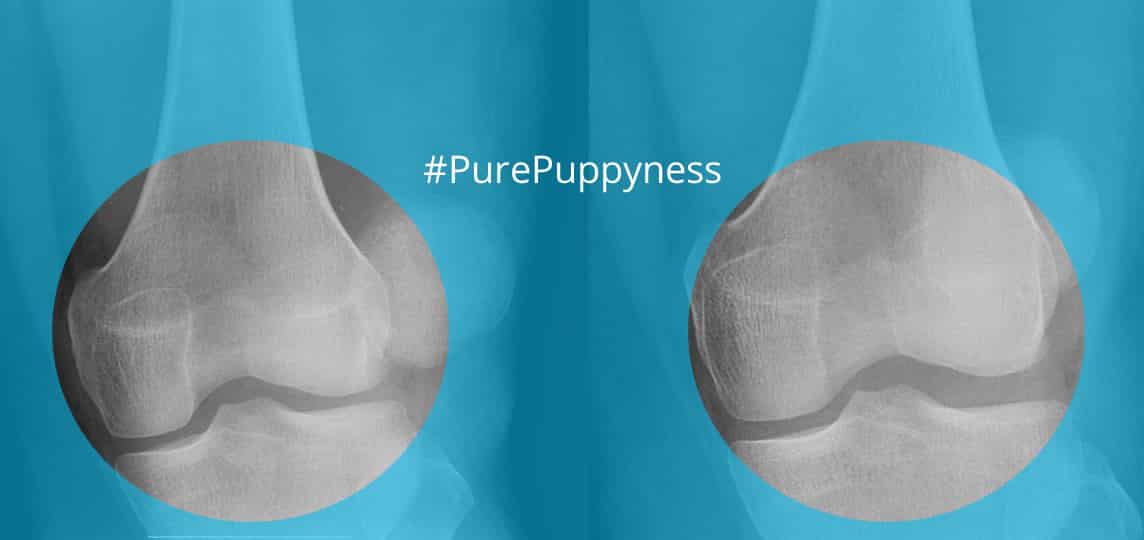
A dog’s skeletal structure is remarkably similar to a human’s. They share the same bones in their hind legs that we have in our own: the femur (thigh bone), tibia (shin bone), and fibula. Dogs also have a knee joint—anatomically referred to as the stifle—and a kneecap, called the patella.
The Mechanics: The patella is a small bone buried in the tendon of the thigh muscle. Normally, it glides smoothly up and down within a specialized groove (the trochlear groove) at the base of the femur as the knee bends and flexes.
In a dog with patellar luxation, this kneecap routinely slips, or luxates, out of its natural groove. The kneecap can pop out in one of two directions:
-
Medial Luxation: The kneecap shifts toward the inside of the leg (the dog’s midline). This is the most common form, especially in small dogs, and often creates a bow-legged appearance.
-
Lateral Luxation: The kneecap shifts toward the outside of the leg. This is less common but is occasionally seen in larger breeds.
When the kneecap is out of place, the knee joint cannot properly extend, leading to sudden lameness, stiffness, or the infamous “skip.”
The Root Causes
In the vast majority of cases, patellar luxation is a genetic, hereditary condition. The bones and muscles of the leg grow abnormally, often resulting in a trochlear groove that is far too shallow to hold the kneecap in place.
Because of selective breeding practices that favor certain body shapes, toy and small breeds are disproportionately affected by this condition. The most susceptible breeds include:
-
Yorkshire Terriers
-
Pomeranians
-
Chihuahuas
-
Pekingese
-
Boston Terriers
-
Miniature Poodles
While genetics is the primary culprit, the condition can also occasionally be triggered by a severe traumatic injury to the knee, such as a tear in the joint capsule or surrounding ligaments.
Recognizing the Symptoms
The most iconic symptom is the intermittent skip. You might notice your dog running normally, suddenly lifting one hind leg for a few steps, and then placing it back down as if nothing happened. This occurs because the kneecap popped out of the groove (causing the lifted leg) and then miraculously popped back in (allowing them to walk normally again).
However, not all dogs will show this classic sign. Other symptoms include:
-
Continuous limping or holding a hind leg up indefinitely.
-
Sitting with the knee positioned awkwardly outward.
-
A stiff, stilted gait in the hindquarters.
-
Cracking or popping noises when the knee is bent.
Diagnosis and the Grading System
To diagnose this condition, your veterinarian will perform a hands-on orthopedic exam. By palpating (feeling) the knee, the vet can physically manipulate the kneecap to see how easily it slips in and out of the groove. X-rays or a CT scan are usually required to check for arthritis, assess bone deformities, and rule out other issues like a torn ACL.
Veterinarians classify patellar luxation on a scale of I to IV based on severity:
| Grade | Description of the Knee Joint |
| Grade I | The kneecap can be manually popped out of place by the vet, but immediately returns to its normal position when released. Seldom causes pain. |
| Grade II | The kneecap frequently pops out on its own (causing the “skip”) and occasionally requires manual manipulation to go back in. Can lead to arthritis over time. |
| Grade III | The kneecap is permanently out of place. It can be pushed back into the groove by the vet, but pops right back out as soon as the knee bends. |
| Grade IV | The kneecap is permanently dislocated and cannot be manually pushed back into the groove. The dog often walks in a constant crouch. |
Treatment Options
The required treatment heavily depends on the dog’s assigned Grade and their level of daily discomfort.
Conservative Management (Grades I & II)
If the luxation is mild and the dog is not in active pain, surgery is rarely required. Instead, your vet will likely focus on lifestyle adjustments to protect the joint. This includes prescribing anti-inflammatory painkillers during flare-ups, starting the dog on high-quality joint supplements (like Glucosamine and Chondroitin), and introducing physical therapy. Above all, the dog may need to go on a strict diet, as carrying excess weight puts devastating, unnecessary stress on a compromised knee.
Surgical Intervention (Grades III & IV)
For dogs with severe luxation, chronic pain, or rapidly advancing arthritis, surgery is usually the only way to restore their quality of life. Veterinary surgeons utilize several techniques to fix the joint, which often involve deepening the femur’s groove, realigning the tendon, or shifting the bone where the patella attaches (the tibial crest) to ensure the kneecap tracks in a straight, secure line.
Prevention: A Breeder’s Responsibility
Unfortunately, there is no simple way for an owner to completely prevent genetic patellar luxation. The true responsibility falls on the shoulders of dog breeders. To eradicate this painful condition, breeders must practice ethical selection; dogs diagnosed with hereditary patellar luxation should simply never be bred.
As a pet parent, the best preventative measures you can take are to maintain your dog at a lean, healthy weight and provide them with regular, low-impact exercise. Finally, avoid overworking your puppy with high-impact activities (like excessive jumping or forced jogging) while their bones and growth plates are still actively developing.