The History of French Bulldog
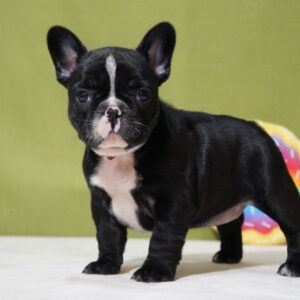
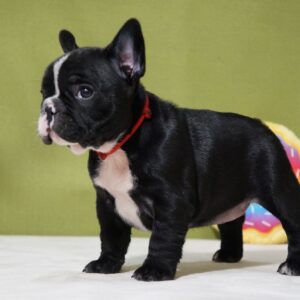
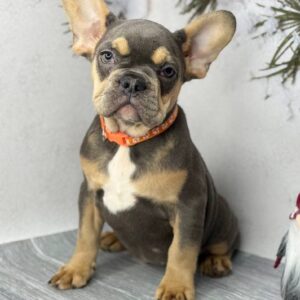
Bat-eared but beautiful: meet the French Bulldog, nicknamed the Frenchie – c’est magnifique! These little dogs are smaller than their English bulldog cousins, making them an ideal lapdog size, though they are still stocky little dogs with some of the same wrinkling seen in English bulldogs.
The French Bulldog owes a lot to the English Bulldog. While the latter was bred for the bloody and dangerous sport of bullbaiting, the former was intended to be a companion dog. The big, strong and athletic bulldogs of the past were bred with pugs and terriers to reduce their size. This created a smaller dog with a rounded head and short lower jaw. Many craftsmen kept these little dogs, especially lace-makers in Nottingham, England. So far, France wasn’t very involved in the history of the French bulldog, but this changed with the Industrial Revolution.
Furieux – male French Bulldog

The many machines and factories developed during the Industrial Revolution spelled disaster for many smaller craftsmen. Lace-makers suffered greatly, as machines had been invented that could do their work for less time and money. In the 1860s, many of the Nottingham lace-makers abandoned England for Normandy in the North of France, and many of the craftsmen took their little Bulldogs with them. The little bulldogs, nicknamed Bouledogues Français, became very popular in France, and breeders in England began to export their smaller or “imperfect” bulldogs to France. The little French bulldogs were popular pets for butchers, café owners, and even the Parisian “belles de nuit” (streewalkers).
The little dogs eventually attracted the attention of the upper classes, and began to develop the dog we know and love today, with its compact body and straight, though lacking the undershot jaw of the English bulldog. The breed also spread to America when tourists fell in love with the little dogs, though they tended to prefer dogs with upright “bat” ears, while in France, both upright ears and “rose” ears (where the tip of the ear is folded) were accepted. An official American breeding program was created in 1885, and the American bred dogs were displayed at the Westminster Kennel Club Dog Show in 1896.
French Bulldog Puppies
French Bulldogs became very popular on the East Coast of the USA. The popularity of the breed lessened after World War I. This was partly due to the popularity of the Boston Terrier, and partly because many French Bulldogs had difficulty giving birth safely. Veterinary medicine was not advanced enough for safe Caesarians to be performed at the time.
The Great Depression also lessened interest in purebred dogs.
World War II was a hard time for the French Bulldog. As lack of food led to the starvation of many dogs, as there was barely enough food in Europe for humans to eat, let alone for animals.
By the 1980s
The number of French Bulldogs was once again on the rise. Today, the Frenchie is one of the most popular dog breeds in the world. Many people are charmed by their bat ears, but just as much by their playful nature and easy-going personality. The French Bulldog isn’t just a pretty face. They are also clever dogs and, as long as their lessons are fun, should be easy to train. You may need to try a few different training techniques to see what works best for your Frenchie.
Like the English Bulldog, they can be a little stubborn, as they tend to think for themselves. They are also protective of their families, and make surprisingly good watchdogs. French Bulldogs love to be around people. They are good indoor dogs as they don’t need much room, and will be happy to live in an apartment. They also get on well with children. They don’t need much exercise, though a daily walk is needed to stop them getting overweight.
Like all brachycephalic breeds (dogs with short, sometimes squashed-looking muzzles) French Bulldogs may have breathing problems, and tend to snort and snore. They are also prone to heatstroke in hot weather. Be sure to prevent them from getting fat, as an overweight French Bulldog may find it difficult to breathe. They may also suffer from joint problems, cleft palates, and elongated soft palates. A reputable breeder will help you to find a healthy puppy. It is important to consult your vet about your dog’s health.
If you want a playful yet relaxed family dog that is happy to live in a small house or apartment, the Frenchie may be the perfect pet for you.