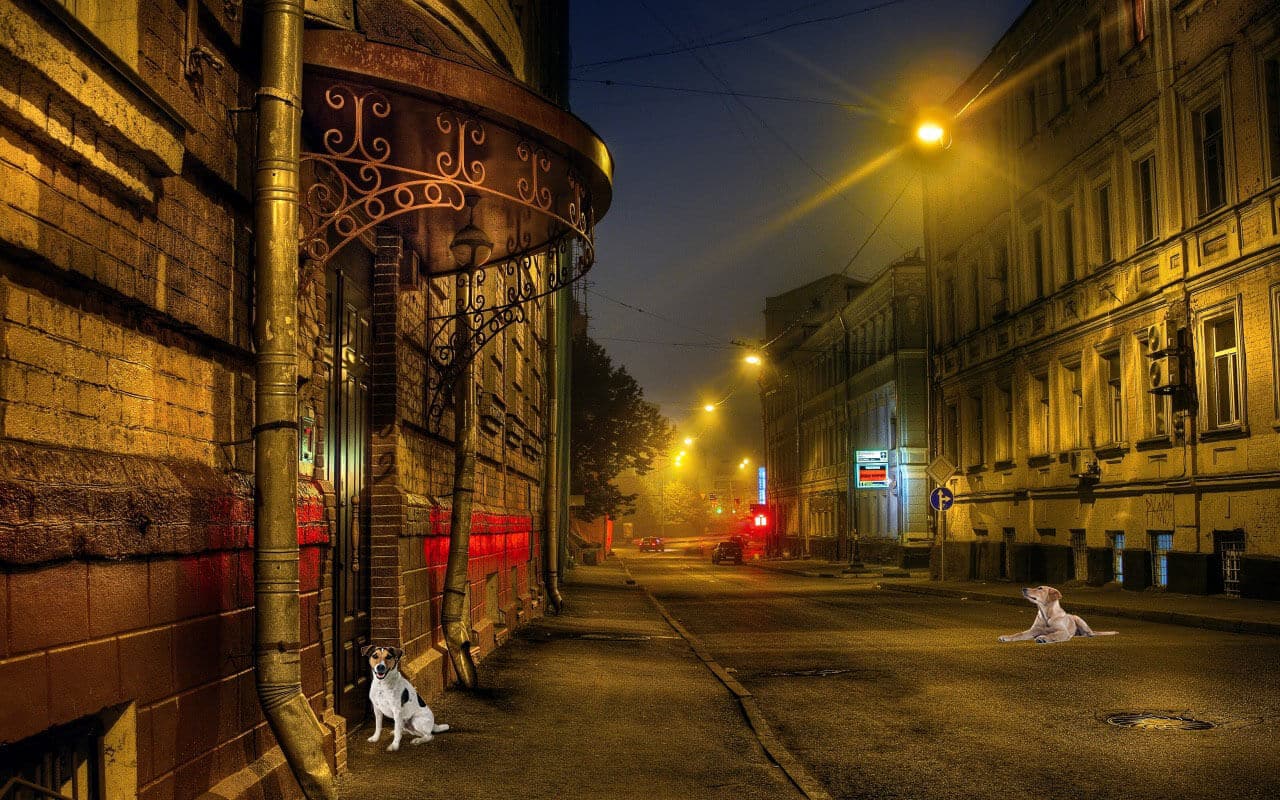
The stray dogs of Moscow
The Urban Pups of Moscow: How Stray Dogs Mastered the Metro
It is a common habit for humans—including scientists and biologists—to look far beyond the man-made environment when searching for something of true ecological wonder. We gaze toward remote wildernesses, deep rainforests, and freezing tundras, viewing nature as something wild, mysterious, and entirely separate from our concrete world.
While it is true that we have barely scratched the surface of all the fascinating phenomena unadulterated nature has to offer, we often overlook an equally staggering biological marvel happening right under our noses: the vibrant, adaptive ecosystems thriving inside our familiar, urban environments.
A Lifetime on the Streets: Andrei Poyarkov’s Landmark Study
Russian biologist Andrei Poyarkov is one rare scientist who managed to tear his gaze away from the allure of pine forests and remote wilderness, choosing instead to focus on his beloved Moscow’s most resilient inhabitants: the city’s massive stray dog population.
For over three decades, Poyarkov dedicated his life to studying these urban canines. During his meticulous research, he observed how the unforgiving realities of city life forced the dogs to undergo profound physical and behavioral transformations. At its peak, Moscow’s stray dog population reached an estimated 35,000 individuals, heavily regulated by food availability and territorial competition. Over generations, intense environmental pressures sculpted these dogs into a distinct phenotype: they generally stabilized as medium-sized animals equipped with thicker, weather-resistant coats and aerodynamic, wedge-shaped heads optimized for scavenging and urban navigation.
Subway Surfers: Canine Ingenuity in the Concrete Jungle
However, the most extraordinary adaptations weren’t physical—they were behavioral.
Faced with brutal Russian winters where temperatures plummet far below freezing, the stray dogs quickly learned to exploit human infrastructure. Initially, they utilized the warmth of subway entrances and steam tunnels to survive the frost. But what happened next stunned researchers: an increasing population of these clever strays learned how to actively ride the Moscow Metro on their own.
These commuter canines mastered the city’s complex transit network. They learned to board specific train cars, recognize the timing of routes, and memorize the distinct auditory announcements of important metro stops. By navigating the underground system, a dog could travel from the outskirts to the bustling city center in a fraction of the time, gaining a massive competitive advantage in securing food and resources. Adapting to a man-made metropolis by relying far more on their wits and cognitive flexibility than on brute strength proved to be a remarkably successful survival strategy. These dogs are actively outsmarting their environment, ensuring the survival and evolutionary success of their progeny for generations to come.
Redefining Domestication
Beyond being an incredible biological novelty, this uncanny ease with which dogs adapt to human infrastructure offers a deeper philosophical and scientific lesson.
It serves as living proof that dogs are not merely visitors in our world; they are biologically co-evolved to cohabit with humans, expertly exploiting the ecological niches we create. This phenomenon challenges the antiquated notion that domestication is some form of “unnatural perversity” or human corruption of the wild. Instead, the relationship between humans and dogs is a brilliant, natural evolutionary process—a testament to the power of cooperation, shared spaces, and mutual survival.