Age and Bonding
Why Older is Often Better: Bonding with a 4 to 6-Month-Old Imported Puppy
When families decide to adopt a dog, they often picture holding a tiny, fragile eight-week-old puppy. However, due to strict international travel regulations, puppies imported to countries like the USA or Qatar usually cannot fly until they are four to six months old. While some buyers initially worry about missing the "tiny puppy" phase, importing a slightly older, fully vaccinated dog actually comes with massive hidden advantages that make the transition dramatically easier.

The Legal Reality of International Pet Travel
The timeline for importing a puppy is dictated by international law, not by the breeder. To cross most international borders, a puppy must have a valid rabies vaccination. Because this vaccine cannot be administered until a puppy is 12 weeks old, and requires an additional waiting period (up to 30 days, or sometimes several months for specific CDC regulations in the US), international travel simply takes time.
But here is the good news: this waiting period is actually a blessing in disguise for first-time owners. It bridges the gap between a high-need, ultra-delicate baby and a young dog who is physically, mentally, and socially prepared to settle seamlessly into your life.
Did You Know? Dogs are incredibly adaptable pack animals. Whether a dog joins your family at 8 weeks, 6 months, or even 2 years old, they are biologically wired to bond deeply with their new caregivers. A slightly older puppy simply understands boundaries much faster.
Benefit 1: Sleeping Through the Night
Ask any new puppy owner about their first month, and they will tell you about the intense sleep deprivation. An eight-week-old puppy has a tiny bladder and requires potty breaks every two to three hours, all night long. Their physical limits mean they simply cannot hold it, leading to inevitable middle-of-the-night wake-up calls.
By the time a puppy reaches four to six months of age, their physical development has progressed significantly. Not only is their bladder capacity larger, but they also have much better muscle control. They can comfortable sleep 6 to 8 hours overnight without needing to go. This means your newly imported puppy is far more likely to sleep through the night from the very first week they arrive, saving you from Exhausting wake-up calls and crate-training struggles.
Benefit 2: Past the Fragile Stage
Very young puppies are susceptible to highly contagious and dangerous diseases, such as Parvovirus. Veterinarians strictly advise against taking an 8-week-old puppy to public parks, pet stores, or letting them walk on public sidewalks until they have completed their full series of booster shots at roughly 16 weeks.
When you are bonding with an older puppy, this stressful waiting period is already over. Your imported puppy arrives with a robust immune system and a complete, verified vaccination record. You can safely start taking them on walks, visiting dog parks, going on hiking trails, and socializing them in public immediately upon arrival. You get all the fun of having an active outdoor companion without the fear of environmental health risks.
Benefit 3: The Pre-Training Advantage
Perhaps the greatest benefit of the international waiting period is how that time can be used. Instead of sitting idly, your puppy can spend those vital developmental weeks in professional training.
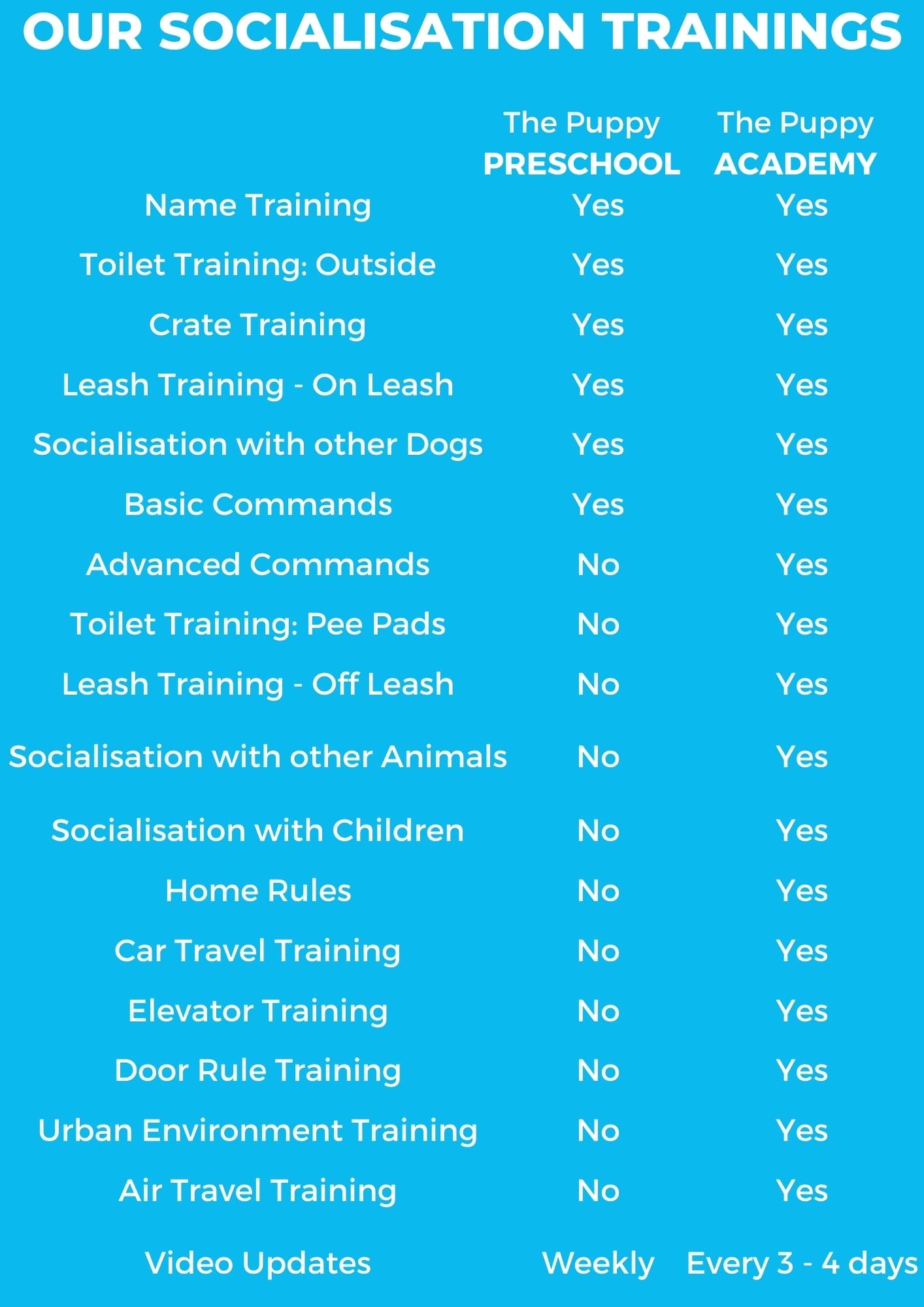
At NewDoggy, many of our clients utilize this mandatory waiting period to enroll their dog in our Puppy Preschool or Academy programs. While waiting for their travel documents to clear, your puppy can learn critical socialization skills, crate training, basic obedience, and leash walking. You receive a dog that is already well-adjusted and knows how to learn, rather than starting from absolute zero with a hyperactive infant. This makes establishing your new daily routine incredibly easy.
Benefit 4: Fewer Teething Tantrums and Better Boundaries
Young puppies explore the world almost entirely with their teeth. Between 8 and 16 weeks, their sharp "baby teeth" are shedding, causing significant gum discomfort and relentless chewing on furniture, shoes, fingers, and baseboards. They also have virtually zero attention span, making redirecting this behaviour exhausting.
By four to six months of age, most of this painful teething is behind them, and their adult teeth are mostly in place. Additionally, their attention span has grown considerably, allowing them to understand commands, recognize boundaries, and understand natural household rules quickly. Rather than constantly policing a "tiny land shark," you get a young dog who wants to listen, play gently, and understand what is expected of them in their new environment.
The Heart of Bonding: Making a Lifelong Connection
A common fear is that "older" puppies won’t bond as deeply as a dog adopted at two months old. In reality, canine bonding has almost nothing to do with whether you are there for their earliest weeks and everything to do with who feeds them, loves them, and guides them in their everyday life.
At 4 to 6 months old, a puppy’s personality is starting to emerge, which means they can actually form a more conscious, interactive, and distinct bond with you. They aren't just looking for a "mother figure" to survive; they are seeking a trusted leader, a playmate, and a companion. They are fully capable of understanding your expressions, recognizing your voice, and offering genuine affection.
Transitioning into a new home takes a few days of patience, but once your puppy realizes you are their pack, they will attach to you with the absolute, unwavering loyalty that dogs are famous for.